
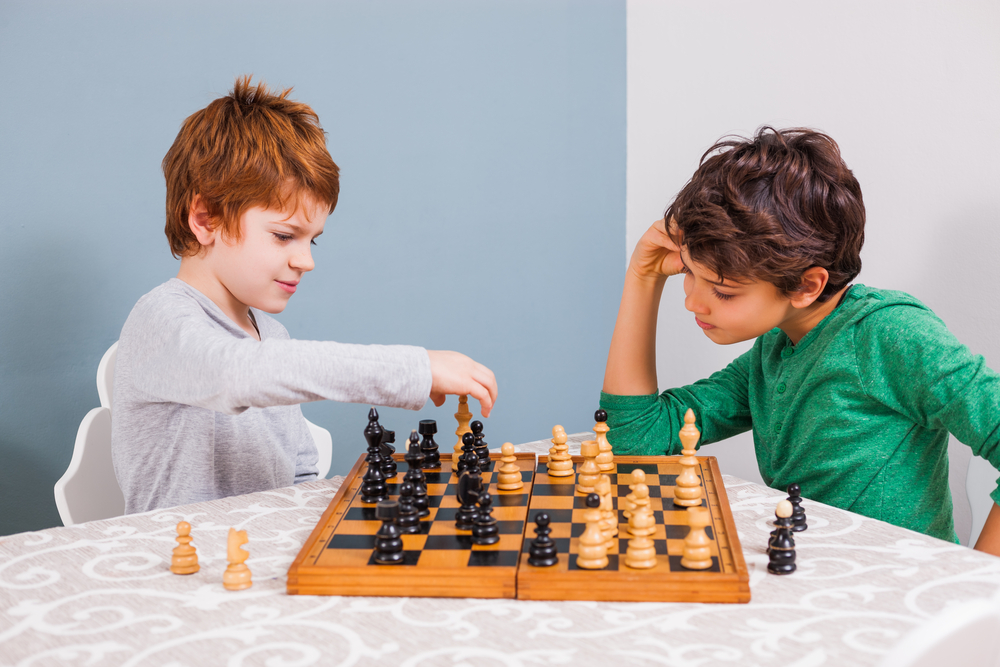
A child’s early years are an important period for developing thinking skills, concentration, memory, decision-making abilities, creativity, and problem-solving habits. While academic subjects provide structured knowledge, activities outside the traditional classroom can also contribute significantly to cognitive development. Chess is one such activity that encourages children to think before acting, understand consequences, recognize patterns, solve problems, and develop strategies. Because every move on a chessboard creates new possibilities, children gradually learn to observe situations carefully instead of making decisions impulsively. This makes chess more than a competitive board game; when taught appropriately, it can become a structured learning activity that supports several important mental skills.
The growing interest in Chess Classes for Kids reflects the increasing awareness among parents about the value of strategy-based learning. Parents looking for Chess Classes for Kids in USA often want an activity that can be both intellectually stimulating and enjoyable. Similarly, Chess Coaching for Kids can provide children with structured opportunities to learn the rules, understand basic tactics, practice decision-making, and gradually develop strategic thinking. At Premier Chess Academy, the focus can be placed on making chess understandable and engaging for young learners while encouraging them to develop skills at a pace appropriate for their age and experience. The goal should not simply be to produce competitive players, but to help children enjoy thinking, learning, and improving through the game.
What Is Cognitive Development in Children?
Cognitive development refers to the way children develop their abilities to think, understand, remember, reason, solve problems, make decisions, and process information. These abilities develop gradually as children interact with people, environments, learning activities, and new challenges. Cognitive development is not limited to academic performance. It also includes everyday skills such as planning what to do next, remembering instructions, comparing choices, recognizing patterns, adapting to unexpected situations, and learning from mistakes.
Chess naturally creates many of these situations. A child looking at a chessboard needs to process the positions of different pieces, understand the rules governing their movement, consider possible responses, and decide what action makes the most sense. Even a simple position can require several steps of thinking. Over time, repeated practice can encourage children to become more comfortable with structured problem-solving and careful decision-making.
How Does Chess Improve a Child’s Concentration?
Concentration is one of the most important skills children develop through regular learning. In a world filled with constant distractions, children often need opportunities to practice sustained attention. Chess provides a natural environment for this because a player must pay attention to the board throughout the game. A move that appears harmless at first may create an important tactical opportunity several moves later.
During a chess game, children learn to observe the positions of their own pieces and their opponent’s pieces. They need to remember what has happened previously and remain alert to changes on the board. This encourages focused attention because losing track of the position can lead to an immediate mistake.
Regular Chess Training for Kids can therefore provide repeated practice in maintaining attention during a structured activity. The benefits should not be described as guaranteed improvements in every child’s academic performance, but chess gives children a practical environment in which sustained attention and careful observation are repeatedly exercised.
Does Chess Improve Problem-Solving Skills?
One of the clearest connections between chess and cognitive development is problem-solving. Almost every chess position presents a problem. A player may need to find a safe move, defend a piece, create an attack, respond to a threat, or choose between several possible plans.
Children gradually learn that a problem may have more than one possible solution. Instead of immediately choosing the first move that looks attractive, they can be encouraged to ask questions such as: What is my opponent threatening? What happens if I make this move? Is there a stronger alternative? What could happen next?
This process encourages analytical thinking. The child learns to break a complicated situation into smaller parts and evaluate possible outcomes. These habits can be useful beyond chess because problem-solving in everyday life often requires the same basic process: understand the situation, identify choices, consider consequences, make a decision, and evaluate the result.
How Does Chess Develop Memory?
Memory plays an important role in learning chess. Children need to remember how pieces move, recognize common patterns, recall tactical ideas, and understand principles they have previously learned. As they gain experience, they may begin recognizing familiar positions without consciously analyzing every individual detail.
For example, a child who has practiced common checkmate patterns may recognize a similar position during a future game. This is an example of pattern recognition working together with memory. Chess also requires working memory because players often need to hold possible variations in their minds while considering what could happen after a particular move.
However, effective chess learning should not depend entirely on memorizing openings or sequences. Understanding why a move works is generally more valuable than simply remembering a sequence without understanding the underlying idea. Good Chess Coaching for Kids should therefore balance memory-based learning with reasoning, practical play, and problem-solving.
Why Is Strategic Thinking Important for Children?
Strategic thinking involves looking beyond the immediate action and considering a broader objective. Chess provides an accessible way for children to experience this concept. A player may make a move that does not immediately win material but improves the position for future opportunities.
Children gradually learn that good decisions are not always about obtaining an instant result. Sometimes a player needs to prepare, improve a piece, protect a weakness, control important squares, or wait for the right opportunity.
This can introduce children to the idea of short-term versus long-term thinking. They begin to understand that decisions have consequences and that planning can influence future possibilities. This is one reason structured chess education can be particularly valuable as children become more comfortable with the game.
How Does Chess Encourage Better Decision-Making?
Every chess move requires a decision. Even when there is plenty of time available, the player must eventually choose one move from several possibilities. This creates an environment where children can practice evaluating options before acting.
A useful teaching approach is to encourage children to develop a simple mental routine before making a move. They can look at the opponent’s threats, identify candidate moves, consider possible responses, and then select the move they believe is strongest.
This habit of pausing and evaluating before acting can be an important learning experience. Chess does not guarantee that children will always make better decisions in other areas of life, but it gives them repeated practice with a structured decision-making process.
Can Chess Improve a Child’s Creativity?
Chess is often associated with logic and calculation, but creativity is also an important part of the game. Players sometimes discover unusual tactical ideas, unexpected combinations, positional plans, or alternative ways to solve a difficult position.
A child may look at a familiar position and find a move that another player has not considered. This encourages exploration and experimentation. Chess problems and puzzles can be particularly useful for developing this aspect because they challenge children to search for solutions rather than simply follow instructions.
Creativity in chess does not mean making random moves. Effective creativity usually works together with calculation and understanding. A creative idea becomes useful when the player can evaluate whether it actually works.
How Does Chess Teach Children to Think About Consequences?
One of the most valuable features of chess is the immediate connection between actions and consequences. A player makes a move, and the opponent responds. If the move creates a weakness, the opponent may exploit it. If the move creates a threat, the opponent may need to respond.
This creates a simple cause-and-effect learning environment. Children can see that decisions influence outcomes. When a mistake occurs, they have an opportunity to examine what happened and understand how a different choice could have changed the position.
This learning process can help normalize mistakes as part of improvement. Rather than viewing an incorrect move only as failure, a child can learn to ask what the position teaches them.
What Role Does Chess Play in Developing Patience?
Chess rewards thoughtful play. A child may have to spend considerable time analyzing a position before finding a useful move. This can encourage patience and discourage purely impulsive decision-making.
Patience is particularly important for young learners because many skills develop gradually. Children may not understand strategic concepts immediately, and improvement can require repeated practice. Chess gives them an opportunity to experience this process directly.
A good learning environment should make this process enjoyable rather than putting unnecessary pressure on children to win every game. When children understand that improvement matters more than immediate results, they can become more comfortable with learning through practice.
Chess and Emotional Development
Although chess is primarily a cognitive activity, it also creates opportunities for emotional learning. Losing a game can be frustrating, especially for children who are highly competitive. Learning to handle a loss, review mistakes, and try again can become an important part of the chess experience.
Similarly, winning can teach children to remain respectful and focused. A balanced chess environment should encourage good sportsmanship, patience, respect for opponents, and a positive attitude toward learning.
This is why the quality of instruction matters. Chess Classes for Kids should create an environment where children feel comfortable asking questions, making mistakes, and improving gradually. Competitive opportunities can be valuable, but they should complement learning rather than replace it.

How Can Chess Support Pattern Recognition?
Pattern recognition is central to strong chess play. Experienced players often recognize familiar tactical and positional patterns more quickly than beginners because they have encountered similar situations repeatedly.
Children develop this skill through exposure to chess puzzles, practical games, instructional positions, and guided analysis. They may begin recognizing ideas such as forks, pins, discovered attacks, basic mating patterns, or vulnerable pieces.
Pattern recognition can make chess more efficient because the player does not have to analyze every possibility from the beginning. However, children should still be encouraged to verify their ideas rather than relying only on recognition.
Why Is Chess Training for Kids Different From Adult Chess Learning?
Children and adults can learn chess in different ways because their attention spans, prior knowledge, learning preferences, and developmental stages may vary. Young learners often benefit from visual explanations, practical examples, puzzles, games, stories, and shorter learning activities.
The objective of Chess Training for Kids should therefore be age-appropriate. A beginner child does not need to understand advanced opening theory immediately. First, the child should become comfortable with the board, piece movement, basic tactics, check, checkmate, and fundamental principles.
As the child’s skills develop, lessons can gradually introduce deeper concepts such as strategic planning, positional evaluation, calculation, opening principles, endgames, and tournament preparation.
What Should Parents Look for in Chess Classes for Kids in USA?
Parents searching for Chess Classes for Kids in USA should look beyond the basic question of whether an academy teaches chess. The learning environment, teaching approach, lesson structure, communication, and age suitability can all influence a child’s experience.
A strong program should explain concepts clearly, provide opportunities for practice, encourage questions, and help children understand their mistakes. Parents may also want to consider whether the program offers beginner and advanced learning pathways, online or in-person options where applicable, practice opportunities, and progress feedback.
The most appropriate program depends on the child’s age, experience, goals, schedule, and personality. Some children may enjoy casual learning, while others may want structured tournament preparation. A good academy should be able to support different learning objectives without making every child follow exactly the same path.
Four Things Parents Should Consider Before Choosing a Chess Program
Age-Appropriate Teaching: Lessons should match the child’s age, experience, attention span, and current understanding.
Qualified Instruction: Look for instructors who can explain chess concepts clearly and teach children patiently.
Practice and Feedback: Children need opportunities to play, solve positions, review mistakes, and understand how to improve.
Positive Learning Environment: The program should encourage curiosity, confidence, discipline, and good sportsmanship rather than focusing only on winning.
How Can Premier Chess Academy Support Children’s Chess Learning?
Premier Chess Academy can be positioned as a learning-focused destination for families interested in developing their children’s chess skills through structured instruction and practice. For young learners, the objective should be to make chess approachable while gradually introducing more advanced concepts as their understanding improves.
A child beginning chess may need help learning the board and basic rules, while an experienced player may benefit more from tactical puzzles, strategic planning, game analysis, and competition-oriented preparation. A flexible teaching approach can help ensure that lessons remain challenging without becoming unnecessarily overwhelming.
The most valuable outcome is not simply knowing more chess moves. Children can benefit from learning how to approach a problem, think carefully, evaluate choices, learn from mistakes, and continue improving. These are the habits that make chess a meaningful educational activity.
Can Chess Help With Academic Learning?
Chess should not be presented as a replacement for school education. However, the thinking processes involved in chess overlap with several general learning skills, including concentration, memory, logical reasoning, planning, and problem-solving.
Children who enjoy chess may also develop a positive attitude toward challenging mental tasks. When they encounter a difficult chess puzzle, they learn to persist, test possibilities, and search for a solution. Similar attitudes can be useful when approaching challenging academic work.
The important distinction is that chess is one learning activity among many. A child’s overall development depends on a combination of education, physical activity, social interaction, creative experiences, family support, sleep, and other factors.
How Often Should Children Practice Chess?
The ideal practice schedule depends on the child’s age, interest, and goals. Young beginners may benefit from shorter, enjoyable sessions rather than long lessons that create fatigue. As children become more interested and skilled, they may naturally want to spend more time playing games, solving puzzles, and studying positions.
Consistency is generally more useful than occasional intensive sessions. A child who practices regularly can gradually build familiarity with chess concepts and patterns. Parents should also allow children to enjoy the game rather than turning every chess activity into a performance test.
Chess as a Lifelong Learning Activity
One of the strengths of chess is that it can grow with the learner. A beginner can enjoy learning how the pieces move, while an experienced player can spend years studying strategy, tactics, endgames, openings, and advanced positions.
This makes chess a flexible activity for children as they grow older. Their goals can evolve from simply learning the game to participating in school competitions, online games, tournaments, or advanced training.
The game also provides continuous intellectual challenges. There is always another position to analyze, another mistake to understand, and another concept to learn. This can help children develop a healthy relationship with continuous learning.
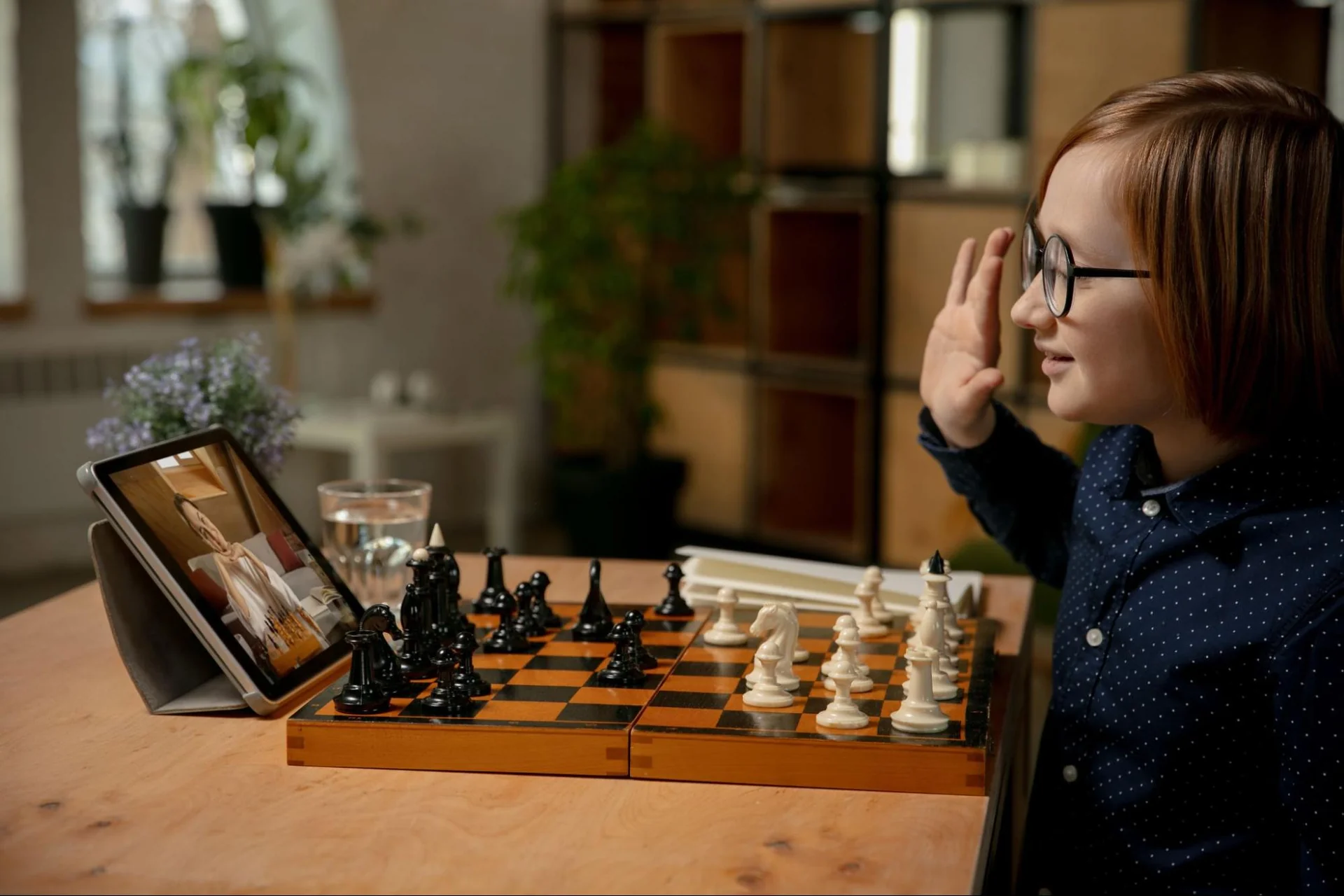
Common Mistakes Parents Should Avoid
One common mistake is placing too much emphasis on winning. If every chess game becomes a test of performance, children may begin associating the game with pressure rather than curiosity. Another mistake is introducing advanced theory too quickly. Children need a strong foundation before complex concepts become meaningful.
Parents should also avoid comparing one child’s progress with another child’s progress. Learning speed varies significantly. Some children quickly understand tactics, while others may initially excel at strategic thinking or pattern recognition. The focus should remain on steady improvement and enjoyment.
A supportive parent can ask what the child learned from a game rather than only asking whether the child won. This simple change can encourage a growth-oriented approach to chess.
FAQs
What are the main cognitive benefits of chess for children?
Chess provides children with repeated opportunities to practice concentration, memory, pattern recognition, problem-solving, planning, decision-making, and logical reasoning. The extent of benefit can vary between children and depends on how chess is taught and practiced.
At what age can children start learning chess?
Many children can begin learning basic chess concepts at an early age, but the appropriate starting point depends on attention span, interest, and developmental readiness. Younger children often benefit from simple, visual, and game-based instruction.
Are Chess Classes for Kids useful for beginners?
Yes. Structured classes can help beginners understand the board, piece movement, basic tactics, checkmate, and fundamental chess principles in a progressive way. A supportive teacher can also make the learning process more enjoyable.
What should parents expect from Chess Coaching for Kids?
Parents should expect age-appropriate instruction, practice opportunities, feedback, and gradual skill development. The exact program may differ depending on whether the child is a complete beginner, intermediate player, or competition-focused learner.
Can Chess Training for Kids improve academic performance?
Chess develops skills such as concentration, planning, and problem-solving that are also useful in learning. However, it should not be presented as a guaranteed way to improve grades. Academic performance depends on many factors, and chess should complement rather than replace regular education.
Why choose structured Chess Classes for Kids in USA?
Structured classes can provide children with a consistent learning pathway, instructor guidance, practice opportunities, and age-appropriate challenges. Parents can select a program based on the child’s experience, goals, preferred learning format, and schedule.
Conclusion
Chess offers children much more than the opportunity to play a traditional board game. It creates a structured environment where they can practice concentration, memory, planning, problem-solving, pattern recognition, decision-making, patience, and learning from mistakes. Every position presents a new challenge, and every game gives children an opportunity to reflect on their choices. These experiences can make chess a valuable complementary activity during childhood development.
For parents exploring Chess Classes for Kids, Chess Classes for Kids in USA, Chess Coaching for Kids, or Chess Training for Kids, the most important consideration is to choose a learning environment that combines structured instruction with enjoyment and age-appropriate challenges. Premier Chess Academy can be presented as an option for families seeking a focused chess-learning experience where children can gradually build their knowledge and confidence. Ultimately, the greatest value of chess may not be measured only by tournament results or rating improvements, but by the child’s growing ability to think carefully, approach challenges patiently, evaluate choices, and keep learning from every move.
Recent Comments