

Chess is a game of strategy, patience, calculation, pattern recognition, and decision-making. While playing regularly can help you become more familiar with the game, structured coaching can make the learning process more focused and effective. This is where Online Chess Coaching has become a practical option for beginners, school students, tournament players, and adults who want to improve their skills without attending a physical academy. With live classes, guided practice, game analysis, personalized feedback, and access to experienced coaches, online learning can provide a structured environment for developing chess knowledge and playing ability.
Choosing the right coaching program is important because not every online chess class follows the same teaching approach. A good program should match the player’s current skill level, learning goals, schedule, and competitive ambitions. Whether someone is learning the rules for the first time or preparing for tournaments, best Online Chess Coaching should focus on understanding rather than simply memorizing openings or moves. For students and players in the United States, finding reliable Online Chess Coaching in USA can provide access to structured instruction while allowing them to learn from home. Premier Chess Academy provides a coaching-oriented approach designed to help learners develop their chess skills progressively through guided lessons and regular practice.
What Is Online Chess Coaching?
Online chess coaching is a structured form of chess instruction delivered through digital platforms. Instead of travelling to a physical academy, students can attend lessons using a computer, tablet, or other compatible device. Depending on the program, classes may include live sessions with a coach, interactive chessboards, tactical exercises, game analysis, homework, practice games, and feedback.
The biggest difference between simply playing chess online and taking coaching is structure. Online chess platforms can provide thousands of games and puzzles, but players may not always understand why they are making repeated mistakes. A coach can identify weaknesses, explain concepts, demonstrate better decision-making processes, and create a learning path suited to the student’s level.
For beginners, coaching can establish strong fundamentals. For intermediate players, it can help identify recurring tactical and strategic mistakes. Advanced players may use coaching to prepare for tournaments, analyze their games more deeply, improve opening preparation, or develop stronger calculation skills.
How Online Chess Coaching Improves Your Chess Skills
One of the biggest advantages of structured coaching is that it turns practice into purposeful learning. Playing dozens of games does not automatically guarantee improvement. A player can repeat the same mistakes if there is no feedback or reflection. Coaching creates a process in which players learn a concept, apply it during practice, review the result, and understand what could be improved.
A qualified coach can also adjust lessons according to the player’s development. If a student understands basic tactics but struggles with endgames, the coach can spend more time on endgame principles instead of continuing to repeat beginner-level lessons. This personalized approach can make learning more efficient.
1. Stronger Understanding of Chess Fundamentals
A strong chess foundation is essential for long-term improvement. Beginners need to understand piece movement, check, checkmate, castling, pawn structure, exchanges, basic tactics, and fundamental principles of opening, middlegame, and endgame play.
A structured Online Chess Coaching program can introduce these concepts progressively. Rather than learning isolated moves, students can understand why certain decisions are useful and how different chess principles connect with one another.
For example, a beginner may learn that developing pieces is important during the opening. Coaching can take this concept further by explaining why development matters, how to avoid unnecessary piece moves, how to protect the king, and how development affects the transition into the middlegame.
This type of understanding creates a stronger foundation than memorizing a list of opening moves without knowing their purpose.
2. Better Tactical Awareness
Tactics are an important part of practical chess. Players need to recognize opportunities such as forks, pins, skewers, discovered attacks, double attacks, and mating patterns. Many games are decided because one player notices a tactical opportunity while the other overlooks it.
Online coaching can help players develop tactical awareness through guided exercises and practical examples. Instead of simply solving random puzzles, students can learn how to identify tactical patterns and understand the thought process behind them.
Over time, repeated exposure to tactical ideas can help players recognize familiar patterns more quickly during actual games. A coach can also explain why an incorrect move fails, helping the student develop better calculation habits rather than relying only on intuition.
3. Improved Calculation Skills
Strong chess players need to calculate variations before committing to important moves. Calculation involves considering possible responses, identifying candidate moves, comparing variations, and evaluating resulting positions.
This is an area where coaching can provide significant value. A coach can teach students how to slow down at critical moments and ask useful questions before making a move. Instead of immediately playing the first move that looks attractive, students can learn to consider their opponent’s threats, forcing moves, tactical possibilities, and positional consequences.
Regular guided calculation exercises can help players become more disciplined. This does not mean calculating every possible variation in every position. Instead, the goal is to recognize when deeper calculation is necessary and approach those positions systematically.
4. Better Opening Understanding
Openings can be confusing for developing players because there are thousands of possible variations. Many beginners believe improvement means memorizing as many opening moves as possible. In reality, understanding opening principles is often more useful during the early stages of development.
An effective coaching program can teach players how to develop pieces efficiently, control important squares, protect the king, connect the rooks, and recognize common strategic ideas. As players progress, they can gradually develop a practical opening repertoire that suits their style.
For tournament players, coaching can also help with deeper opening preparation. The focus should remain on understanding the resulting positions rather than memorizing variations without context.
5. Stronger Middlegame Strategy
The middlegame is often where players struggle because there may not be an obvious plan. Once the opening is complete, a player needs to understand what to do next. This can involve evaluating pawn structures, identifying weak squares, improving pieces, creating plans, and recognizing tactical opportunities.
Online coaching can help students understand strategic concepts through model games and practical positions. A coach can explain why a particular piece belongs on a certain square or why exchanging one piece may be beneficial in one position but harmful in another.
Developing this positional understanding can help players move beyond simply looking for immediate threats. They begin to think about improving their position and creating long-term advantages.
6. Improved Endgame Technique
Endgames are sometimes neglected by developing players because they appear less exciting than openings or tactics. However, endgame knowledge can have a major impact on practical results.
Coaching can introduce important endgame concepts such as king activity, pawn promotion, opposition, basic checkmating techniques, rook endgames, and piece coordination. Students can also learn how to convert advantages and defend difficult positions.
Understanding endgames can improve a player’s confidence because they know what objectives they are trying to achieve when fewer pieces remain on the board. Regular practice can make important techniques more familiar.
7. Personalized Feedback From a Coach
One of the strongest advantages of best Online Chess Coaching is personalized feedback. Chess engines can identify tactical mistakes and evaluate positions, but a human coach can explain the reasoning behind the mistake in a way that matches the student’s level.
For example, an engine may show that a move loses a significant evaluation advantage. A coach can explain whether the problem was poor calculation, a missed tactical threat, incorrect positional judgment, or misunderstanding of a strategic concept.
This distinction matters because improvement comes from understanding mistakes rather than simply knowing that a move was inaccurate. Personalized feedback allows players to recognize patterns in their errors and work on specific weaknesses.
8. Detailed Game Analysis
Every chess game provides an opportunity to learn. Reviewing games after playing is one of the most effective ways to identify recurring problems.
During a coaching session, a player can review important moments from their games and discuss alternative decisions. The goal is not simply to find the first engine-approved move. Instead, the player should understand what they were thinking at the time and why the position became difficult.
Over several games, patterns may become visible. A player may frequently lose material because of tactical oversights, spend too much time in certain positions, enter unfavorable endgames, or struggle against specific pawn structures. Coaching can turn these patterns into targeted training goals.
9. More Consistent Practice
Consistency is often more important than occasional intensive practice. A student who trains regularly can build habits gradually and reinforce concepts through repetition.
Online classes can make consistency easier because students do not need to travel to an academy. Lessons can take place from home according to an agreed schedule. This can be particularly useful for school students, working professionals, and families with busy routines.
A structured training schedule may combine lessons, tactical exercises, practice games, game analysis, and revision. The exact schedule should depend on the student’s age, level, goals, and available time.
10. Flexible Learning for Players in the USA
For students looking for Online Chess Coaching in USA, online instruction can remove geographical limitations. A student does not necessarily need to live near a physical chess academy to access structured coaching.
This flexibility can be useful for families who have demanding schedules or live in areas where specialized chess coaching options are limited. Students can attend lessons from home while continuing to participate in online practice games and tournaments.
When choosing best Online Chess Coaching USA, however, convenience should not be the only consideration. Parents and players should also evaluate coach experience, teaching methodology, class size, curriculum, student feedback, practice opportunities, and the level of individual attention provided.
11. Tournament Preparation
Players who participate in tournaments need a different kind of preparation from casual learners. Tournament preparation may involve opening repertoire development, tactical training, time management, calculation exercises, endgame practice, and analysis of previous games.
A coach can help create a training plan around upcoming competitions. The focus can also shift depending on the player’s weaknesses. For example, one player may need to improve time management while another may need to strengthen endgame technique.
Online coaching can make tournament preparation more accessible because training sessions and game analysis can be organized without requiring regular travel to a physical academy.
12. Better Decision-Making and Patience
Chess teaches players to consider consequences before acting. This is one reason the game is often associated with strategic thinking and decision-making.
Good coaching reinforces this process by encouraging students to evaluate positions before moving. Players learn to ask questions such as: What is my opponent threatening? What are my candidate moves? Is there a tactical opportunity? Which piece is poorly placed? What happens after the exchange?
These habits can make the player’s decision-making process more disciplined. The improvement does not come simply from knowing more chess moves; it comes from developing a repeatable thinking process.
What Should You Look for in Online Chess Coaching?
Choosing an online program requires more than searching for a class with an attractive price. Players should consider whether the program matches their skill level and goals. A beginner needs a different curriculum from an advanced tournament player.
A good coaching program should provide structured lessons, qualified instruction, practical exercises, opportunities to play, and useful feedback. Class size can also matter. Smaller groups or individual sessions may provide more opportunities for personalized attention, while group classes can provide interaction and competitive practice.
Parents choosing a program for children should also consider teaching style. Young learners generally benefit when lessons are engaging, age-appropriate, and structured around progressive learning rather than excessive theory.
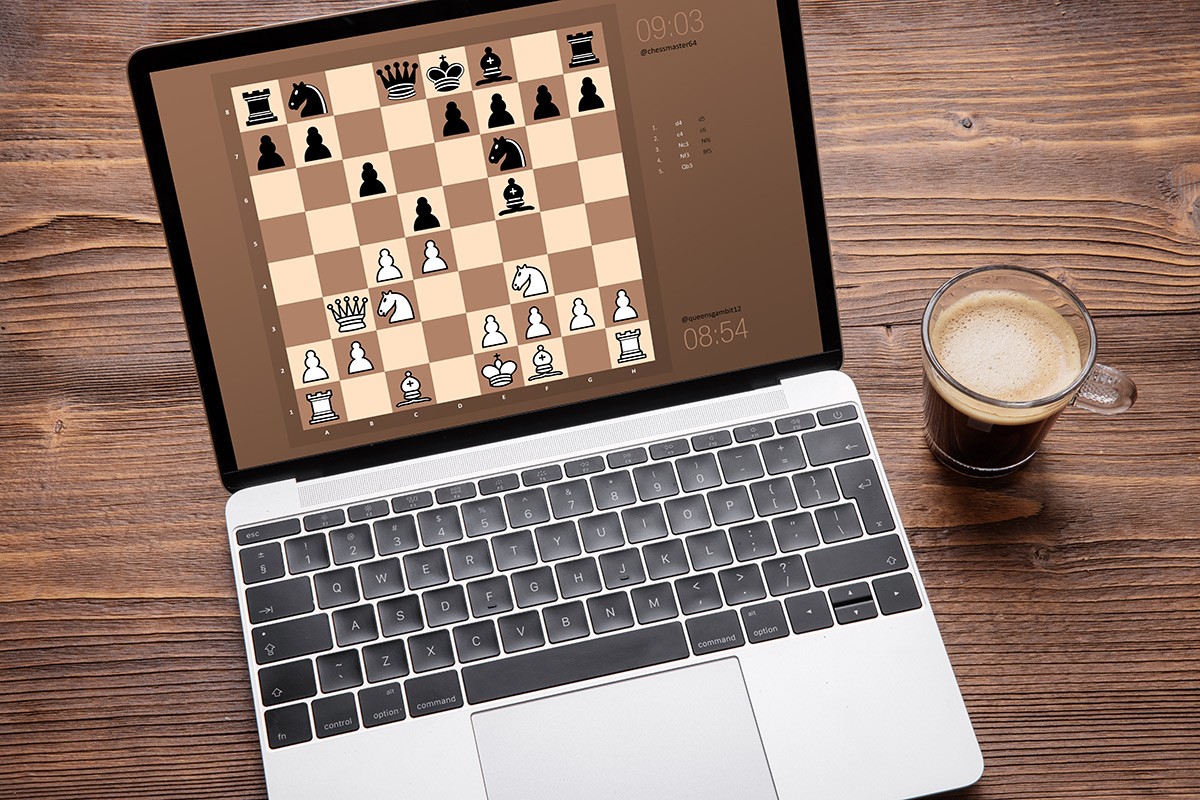
How to Make the Most of Online Chess Coaching
Joining a coaching program is only one part of improvement. Students should actively participate during lessons, complete assigned exercises, play regular practice games, and review important positions after games.
It is also useful to maintain a simple record of recurring mistakes. For example, a player can note tactical oversights, opening problems, time-management issues, or endgame mistakes. Reviewing these patterns with a coach can help make future training more focused.
Students should also avoid comparing their progress too closely with other players. Chess improvement takes time, and progress may not always appear immediately in ratings. Understanding concepts more clearly, making fewer blunders, calculating more accurately, and evaluating positions better are meaningful signs of development.
Why Choose Premier Chess Academy for Online Chess Coaching?
For students and chess enthusiasts searching for Online Chess Coaching, Premier Chess Academy can be considered as a structured learning option for players who want to develop their skills through guided instruction and regular practice.
The objective of effective coaching should be to help students understand chess rather than simply memorize moves. Premier Chess Academy can position its coaching around progressive learning, practical understanding, game analysis, and skill development according to the student’s level.
For families looking for best Online Chess Coaching USA, online learning can provide the convenience of attending classes from home while accessing structured chess instruction. The right coaching approach should consider whether the student is a beginner, developing player, competitive participant, or advanced learner and adjust the training accordingly.
The most valuable part of a coaching relationship is the combination of instruction and feedback. When students understand their mistakes, practice specific skills, and gradually apply those skills in real games, they can build a stronger foundation for long-term chess development.
Common Mistakes Players Make Without Structured Coaching
Many players spend a significant amount of time playing games but do not review their mistakes afterward. This can lead to repeated errors. Another common problem is focusing too heavily on openings while neglecting tactics, calculation, positional understanding, and endgames.
Some players also rely completely on chess engines. Engines are excellent analytical tools, but simply looking at the evaluation number does not automatically teach a player how to think better. Understanding why a position is difficult and how to recognize similar situations in future games is more valuable for long-term development.
Another mistake is changing training methods too frequently. Improvement requires consistency. Players should give themselves enough time to understand and apply a concept before moving on to another training method.
Final Thoughts
Online Chess Coaching can provide a structured and convenient way to improve chess skills at different levels. From learning fundamental principles and recognizing tactical patterns to improving calculation, strategy, endgame technique, and tournament preparation, guided coaching can make practice more purposeful.
The biggest advantage is not simply the ability to attend a chess class from home. It is the opportunity to receive structured instruction and meaningful feedback based on actual games and individual weaknesses. With regular practice and a consistent learning plan, students can gradually build stronger chess habits and a deeper understanding of the game.
If you are comparing best Online Chess Coaching options or searching for Online Chess Coaching in USA, look beyond promotional claims and evaluate the quality of instruction, curriculum, feedback, flexibility, and suitability for your goals. Premier Chess Academy can be a valuable option for learners who want structured online chess education and a clear path toward developing their playing skills.
FAQs
1. Can Online Chess Coaching really improve chess skills?
Yes. Structured online coaching can help players improve by providing lessons, guided practice, game analysis, tactical exercises, and personalized feedback. The amount of improvement depends on factors such as the player’s starting level, consistency, practice habits, and learning goals.
2. Is Online Chess Coaching suitable for beginners?
Yes. Beginners can benefit from structured coaching because they can learn fundamental rules, principles, tactics, and basic strategies in a progressive order. A good coach can also correct mistakes before they become long-term habits.
3. How often should I attend Online Chess Coaching?
The ideal frequency depends on your age, skill level, goals, and available practice time. Consistent weekly coaching combined with independent practice can provide a useful structure for many learners.
4. What is the best Online Chess Coaching USA option for children?
Parents should compare the curriculum, coach experience, class size, teaching style, feedback system, practice opportunities, schedule, and suitability for the child’s current skill level. The best program is one that supports both learning and sustained interest in chess.
5. Can Online Chess Coaching help with tournament preparation?
Yes. Coaching can help tournament players prepare through opening work, tactical training, calculation exercises, endgame practice, game analysis, and strategic preparation. A coach can also identify individual weaknesses that should be addressed before a competition.
Recent Comments