
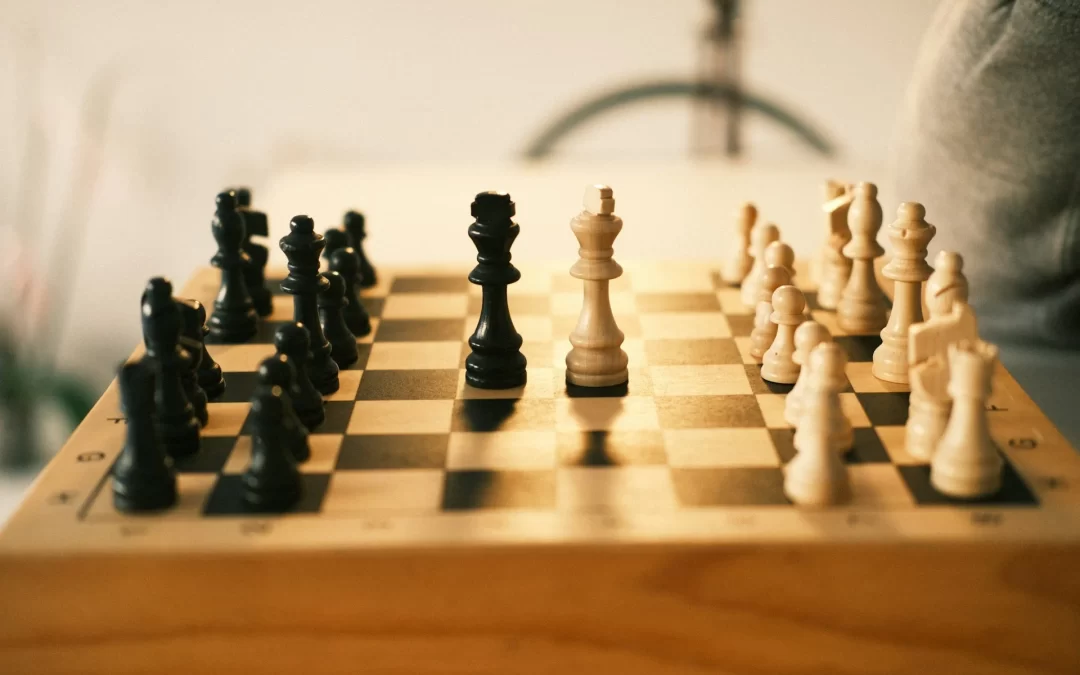
Chess is much more than a board game. For children, learning chess can create opportunities to practice concentration, planning, decision-making, patience, logical reasoning, and problem-solving in an engaging environment. Every move requires a player to observe the position, consider possibilities, anticipate consequences, and make a decision. This makes structured Chess Classes for Kids a valuable learning activity for parents who want their children to develop thinking skills while enjoying a challenging and creative game. The right learning environment can make chess approachable for beginners while gradually introducing more advanced concepts as children become comfortable with the game.
At Premier Chess Academy, the focus is on creating a structured and encouraging learning experience where children can develop their chess knowledge alongside important thinking habits. Whether a child is completely new to chess, already understands the basic rules, or wants to prepare for competitive play, well-planned Chess Coaching for Kids can provide a clear learning path. With flexible Online Chess Coaching and access to a dedicated Chess Academy for Kids USA, children can learn from home while receiving instruction, practice opportunities, feedback, and age-appropriate guidance.
Why Chess Is a Valuable Learning Activity for Kids
Children learn best when education feels engaging rather than forced. Chess provides a practical way to introduce several thinking processes through an activity that has clear rules and immediate consequences.
When children play chess, they must pay attention to the position, identify possible moves, compare alternatives, and think about what could happen next. They also learn that decisions have consequences and that improving at a skill requires practice.
This does not mean chess automatically improves every academic ability or guarantees higher grades. Instead, chess provides repeated opportunities to practice habits such as concentration, planning, logical reasoning, and reflection.
That is why quality Chess Classes for Kids should focus not only on teaching moves but also on helping children understand why decisions are made.
What Children Learn in Chess Classes
A well-structured chess program usually begins with the fundamentals and gradually introduces more complex concepts.
Beginners learn how the board is organized, how each piece moves, the value of pieces, check, checkmate, castling, pawn promotion, and other essential rules. Once children understand the basic mechanics, they can begin learning tactical patterns, opening principles, strategic ideas, endgame concepts, and practical decision-making.
The learning process should match the child’s age and current ability.
A young beginner should not be overwhelmed with complicated theory. Instead, concepts can be introduced gradually through examples, puzzles, games, and interactive activities.
How Chess Develops Thinking Skills
Chess naturally encourages children to think before acting.
A player cannot simply move a piece without considering the opponent’s response. Even a basic position creates a sequence of questions: What is happening? What are my options? What might my opponent do? Which move is safest or strongest? What could happen after that?
These questions encourage children to develop a habit of evaluating choices.
Over time, children may become more comfortable with breaking a problem into smaller parts, comparing alternatives, and thinking about consequences before making a decision.
Chess and Problem-Solving
Problem-solving is one of the central elements of chess.
Every position presents a challenge. Sometimes a player needs to find a tactical solution. At other times, the challenge is deciding where a piece should be placed or how to improve the position.
Chess Coaching for Kids can turn these situations into structured learning exercises. Coaches can present puzzles and positions and encourage children to explain their reasoning rather than simply provide the correct answer.
This distinction matters because the objective is not just to memorize moves. Children should learn how to approach unfamiliar situations.
Chess and Concentration
A chess game requires attention to the board and awareness of changing circumstances.
Children who are learning chess practice observing multiple pieces and remembering previous moves while considering possible future moves.
During Chess Classes for Kids, coaches can use short exercises and gradually longer games to develop sustained attention without making the learning experience unnecessarily difficult.
The goal is to create an environment where children learn to focus on a task and complete it thoughtfully.
Chess and Strategic Thinking
Strategy involves thinking beyond the immediate move.
Children can learn that a move may have a short-term benefit but create a problem later. They can also learn that sometimes a player needs to make a small improvement before attempting a larger plan.
As children progress, chess lessons can introduce concepts such as controlling the centre, developing pieces, king safety, pawn structure, open files, weak squares, exchanges, and long-term planning.
These concepts help children understand that good decisions often require considering both immediate and future consequences.
Chess and Decision-Making
Chess gives children a safe environment in which to practice decision-making.
There is usually no single guaranteed move in every position. Players must evaluate possibilities and choose an option based on the available information.
A coach can encourage students to ask themselves simple questions before moving:
What is my opponent threatening? What are my candidate moves? What happens after my move? Is my piece safe? Does the move support my plan?
With practice, these questions can become part of a child’s chess thinking process.
:max_bytes(150000):strip_icc()/Womanplayingchess-GettyImages-163245712-59ed65e1396e5a001035af0b.jpg)
Chess and Patience
Children naturally want to act quickly, but chess rewards thoughtful decisions.
A child may learn that making the first move that comes to mind is not always the best approach. Taking a moment to examine the position can prevent simple mistakes.
This can make chess an excellent environment for practicing patience and deliberate thinking.
However, chess education should remain enjoyable. Coaches should encourage thoughtful play without turning every game into a stressful performance test.
Chess Academy for Kids USA
Families looking for a Chess Academy for Kids USA should consider more than simply the number of classes offered.
A good academy should provide structured lessons, age-appropriate teaching, opportunities for practice, feedback, and a supportive environment.
Children have different learning speeds and interests. Some may enjoy casual games, while others may become interested in tournaments and competitive chess.
A flexible academy can accommodate these different goals while helping children build a strong foundation.
Kids Chess Academy USA: What Parents Should Look For
When choosing a Kids Chess Academy USA, parents should evaluate the teaching approach, instructor experience, curriculum, class size, scheduling options, practice opportunities, and communication with families.
It is also worth asking whether the academy separates students according to experience or provides appropriate activities for different skill levels.
A complete beginner should not feel lost in an advanced class, while an experienced student should have opportunities to continue progressing.
The best environment is one where children feel challenged without feeling discouraged.
Online Chess Coaching for Kids
Technology has made chess education accessible from almost anywhere.
Online Chess Coaching allows children to participate in lessons from home using a computer or tablet. Digital chess boards make it possible for instructors to demonstrate positions, review games, solve puzzles, and provide interactive exercises.
Online learning can be particularly useful for families who do not have a suitable chess academy nearby or who need flexible scheduling.
However, online classes should still be interactive. Children should have opportunities to ask questions, solve positions, play games, and receive feedback rather than simply watch a teacher speak.
Benefits of Online Chess Coaching
One of the biggest benefits of Online Chess Coaching is convenience.
Children can attend lessons without travelling to a physical location. This can make it easier for families with busy schedules.
Online platforms can also provide access to digital boards, puzzles, game analysis, tournament information, and practice resources.
For children who are comfortable with technology, online chess can provide a highly interactive learning environment.
At Premier Chess Academy, online learning can be structured around the child’s current skill level and learning objectives.
Beginner Chess Classes for Kids
Beginners need a clear introduction to the game.
Early lessons should focus on understanding the board and pieces before introducing complex strategies.
Children can learn through demonstrations, simple puzzles, mini-games, and practice positions.
For example, a coach may use a simplified board position to teach how a rook moves or how a knight attacks. Once the child understands the idea, the coach can introduce a game situation where that knowledge becomes useful.
This approach can make learning more memorable than simply asking children to memorize rules.
Intermediate Chess Training
Once children understand the basics, training can become more strategic.
Intermediate students can study opening principles, tactical patterns, calculation, positional ideas, endgames, and game analysis.
They can also begin reviewing their own games to identify mistakes and missed opportunities.
Game analysis is especially valuable because it encourages children to reflect on decisions rather than simply move on after losing a game.
A coach can help students identify what happened and how a similar position might be handled differently next time.
Chess Training for Competitive Kids
Some children become interested in competitive chess after learning the basics.
Tournament-focused Chess Coaching for Kids can introduce concepts such as time management, tournament preparation, opening preparation, tactical calculation, endgame technique, and psychological preparation.
Competitive training should remain age-appropriate.
Children should understand that tournaments are opportunities to test skills, learn from mistakes, and gain experience—not simply measurements of personal ability.
A healthy competitive environment can encourage children to work toward goals while maintaining enjoyment.
How Parents Can Support Chess Learning
Parents do not need to be chess experts to support their child’s development.
One of the most useful things parents can do is create a positive environment around practice. Encourage the child to play regularly, celebrate improvement, and treat mistakes as learning opportunities.
Avoid putting excessive pressure on winning.
Children can learn valuable lessons from losses when they are encouraged to understand why the game changed and what they could try differently next time.
A consistent but enjoyable practice routine is usually more helpful than occasional intensive sessions.
Making Chess Fun for Children
Children are more likely to continue learning when they enjoy the process.
A good chess academy can use puzzles, mini-games, challenges, friendly competitions, game analysis, and interactive lessons to keep classes engaging.
Different children respond to different teaching methods. Some enjoy tactical puzzles, others enjoy competitive games, and some prefer learning through stories or demonstrations.
The role of the coach is to make important chess concepts understandable and interesting.
Chess and Creativity
Chess is often associated with logic, but creativity also plays an important role.
Players sometimes need to find unexpected solutions, consider unusual moves, or create new plans when familiar strategies do not work.
Tactical combinations can encourage children to look beyond the obvious move and explore possibilities.
This combination of logical calculation and creative thinking makes chess a particularly interesting learning activity.
Choosing the Right Chess Classes for Kids
Parents should first identify what they want their child to achieve.
If the goal is basic learning, beginner classes may be sufficient. If the child wants regular competition, a more structured training program may be appropriate.
Parents should also consider whether their child learns better in person or online.
The quality of instruction matters more than the format alone.
An effective Chess Academy for Kids USA should provide a structured curriculum, appropriate challenges, regular practice, and constructive feedback.
Why Choose Premier Chess Academy?
Premier Chess Academy focuses on helping children develop chess skills through structured and engaging instruction.
The academy can support learners at different stages, from beginners discovering the game for the first time to students interested in improving their competitive abilities.
Through Chess Coaching for Kids and Online Chess Coaching, children can learn fundamental rules, tactical patterns, strategic concepts, game analysis, and practical decision-making in a supportive environment.
The objective is to help students become better chess players while developing the habit of thinking carefully, evaluating choices, and learning from experience.
Building a Long-Term Chess Learning Journey
Chess improvement does not happen overnight.
Children develop at different speeds, and progress can sometimes be uneven. A child may understand tactics quickly but struggle with endgames, or perform well in lessons but find tournament games challenging.
A good learning journey allows room for these differences.
Regular lessons, consistent practice, game analysis, and gradual exposure to stronger opponents can help children continue developing their skills.
The most important factor is maintaining curiosity and enjoyment.
Conclusion
The best Chess Classes for Kids are not simply about teaching children how to move pieces. They create opportunities to practice concentration, planning, problem-solving, strategic thinking, patience, creativity, and decision-making through an engaging game.
For parents searching for Chess Coaching for Kids, Online Chess Coaching, a Chess Academy for Kids USA, or a Kids Chess Academy USA, the priority should be finding a learning environment that matches the child’s age, ability, interests, and goals.
Premier Chess Academy aims to provide structured chess education that makes learning accessible and engaging while helping students gradually build stronger chess skills. Whether a child is starting from the basics or preparing for competitive play, consistent coaching and meaningful practice can create a strong foundation for continued improvement.
Chess is ultimately a game of choices. Children learn to observe, think, evaluate, decide, and learn from the results. With the right guidance, those habits can make the chess journey both educational and enjoyable.
FAQs
1. What age should children start chess classes?
Children can begin learning chess when they are able to understand simple instructions and remain engaged with a board activity. Many children start during their early school years, but there is no single perfect age. A good program should adapt lessons to the child’s attention span, learning ability, and existing chess knowledge.
2. What do kids learn in Chess Coaching for Kids?
Chess Coaching for Kids can cover board setup, piece movement, checkmate, opening principles, tactics, strategy, endgames, calculation, game analysis, and tournament preparation. A well-structured program also encourages children to think before making decisions and understand the reasons behind different chess moves.
3. Is Online Chess Coaching effective for children?
Yes, Online Chess Coaching can be effective when classes are interactive and appropriately structured. Digital chess boards allow coaches to demonstrate positions, conduct puzzles, analyze games, and play practice games with students. Parents should choose a program that provides active participation and feedback rather than passive video lessons.
4. How do I choose a Chess Academy for Kids USA?
When choosing a Chess Academy for Kids USA, consider the academy’s curriculum, coaching experience, teaching style, class structure, student levels, practice opportunities, scheduling, and communication. It is also important to choose a program where children feel comfortable asking questions and are challenged at an appropriate level.
5. Can chess improve children’s thinking skills?
Chess provides regular opportunities to practice skills such as concentration, planning, logical reasoning, problem-solving, decision-making, and evaluating consequences. It should not be considered a guaranteed way to improve every academic outcome, but structured chess learning can give children a practical environment for developing and practicing these thinking habits.
Recent Comments