
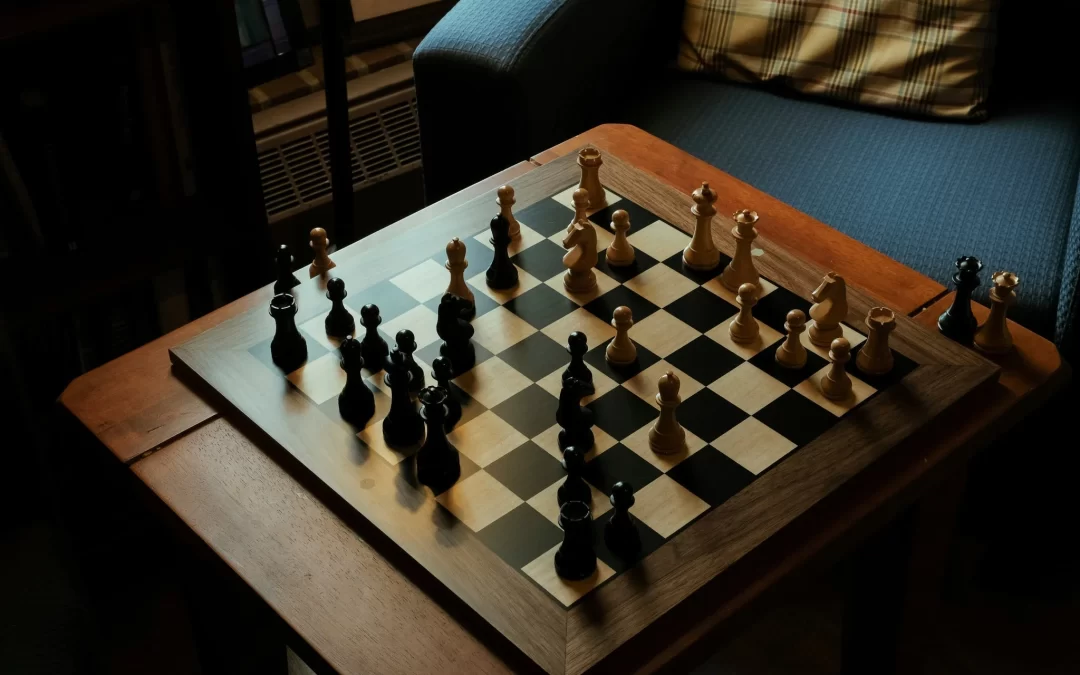
Chess is one of the oldest and most intellectually stimulating games in the world, enjoyed by millions across all age groups. Whether you are a beginner or teaching your child how to play, understanding the Chess Setup is the very first step toward mastering the game. A correct setup ensures fair play, helps players visualize strategies, and builds a strong foundation for learning advanced techniques. Without proper placement of pieces, even the most skilled player can struggle to play effectively.
At Premier Chess Academy, we believe that learning chess should start with clarity and confidence. That’s why mastering the Perfect Chess Setup is essential, especially for beginners and young learners. In this guide, we will explain where each piece goes and why, along with simplified explanations for Chess Setup for Kids and practical tips to make learning fun and easy. Whether you’re a parent, student, or enthusiast, this comprehensive guide will help you understand everything about setting up a chessboard correctly.
What is Chess Setup?
The term Chess Setup refers to the correct arrangement of all chess pieces on the board before the game begins. Each piece has a specific position, and every placement follows a universal rule that applies to all standard chess games.
- The chessboard has 64 squares (8×8 grid)
- Each player starts with 16 pieces
- Pieces are arranged in two rows per player
- White always moves first
Understanding the Perfect Chess Setup is crucial because it ensures both players start on equal footing and follow standardized rules.
Understanding the Chess Board Layout
Before placing the pieces, it is important to position the board correctly. Many beginners make mistakes here, which leads to incorrect gameplay.
- The board should be placed so that a white square is on the bottom-right corner
- Each player sits opposite the other
- Horizontal rows are called ranks
- Vertical columns are called files
This simple rule is the foundation of every Chess Setup, and getting it right is the first step toward becoming a better player.
Where Each Piece Goes and Why
1. Pawns Placement
Pawns are the simplest pieces but play a crucial role in the game.
- All pawns are placed in the second row
- Each player has 8 pawns
- They form a protective wall in front of major pieces
- Pawns control the center of the board
Pawns are essential in Chess For Kids learning because they help beginners understand movement and basic strategy.
2. Rooks Placement
Rooks are powerful pieces used for controlling rows and columns.
- Placed in the corners of the board
- One rook on each side
- Move in straight lines (horizontal and vertical)
- Important for castling
Their corner placement in the Perfect Chess Setup allows them to dominate the board as the game progresses.
3. Knights Placement
Knights are unique because they move in an L-shape and can jump over other pieces.
- Placed next to the rooks
- Two knights per player
- Only piece that can jump over others
- Useful for early attacks
In Chess Setup for Kids, knights are often the most fun pieces to learn due to their unusual movement.
4. Bishops Placement
Bishops control diagonal lines and are key attacking pieces.
- Placed next to the knights
- One bishop on white square, one on black
- Move diagonally across the board
- Control long-range positions
Their placement ensures balance in the Chess Setup, covering both color complexes.
5. Queen Placement
The queen is the most powerful piece on the board.
- Placed on her own color (white queen on white square, black queen on black square)
- Combines the power of rook and bishop
- Central to attacking strategies
- Protects key areas
A common rule to remember in Chess For Kids is: “Queen goes on her color.”
6. King Placement
The king is the most important piece in chess.
- Placed next to the queen
- Only moves one square at a time
- The game revolves around protecting the king
- Checkmate ends the game
The king’s position completes the Perfect Chess Setup, ensuring both players are ready to begin.
Complete Chess Setup Overview
When all the pieces are placed correctly, the chessboard presents a perfectly balanced and symmetrical structure for both players. This symmetry is not just visually satisfying but also essential for fair gameplay, ensuring that neither side has an advantage at the start. In a standard Chess Setup, each player begins with the same arrangement of pieces, mirroring each other across the board. This uniformity is what makes chess a game of pure skill, strategy, and planning rather than chance.
The correct placement of pieces follows a fixed pattern that every chess player must memorize. The back row is arranged in the order: Rook, Knight, Bishop, Queen, King, Bishop, Knight, Rook. Each piece has a specific role, and its starting position is designed to maximize its potential as the game progresses. The front row consists entirely of pawns, forming a protective shield for the more powerful pieces behind them. White pieces are always placed on ranks 1 and 2, while black pieces occupy ranks 7 and 8. This universal structure defines the Perfect Chess Setup used across the world, from casual games to professional tournaments.
Why Proper Chess Setup Matters
Many beginners tend to overlook the importance of setting up the board correctly, assuming it is a simple or minor step. However, the reality is that the entire game depends on a proper setup. Even a small mistake, such as placing the queen on the wrong square or misaligning the board, can lead to confusion and disrupt the flow of the game. A correct Chess Setup ensures that both players start equally and can focus entirely on strategy and gameplay.
A proper setup ensures a fair and balanced start, which is fundamental to competitive play. It prevents unnecessary confusion during the game, especially for beginners who are still learning piece movements. Additionally, it helps players understand strategies more effectively, as all standard openings and tactics are based on correct positioning. Beyond gameplay, it also builds discipline and attention to detail, which are key qualities in chess. At Premier Chess Academy, we strongly emphasize that mastering the Perfect Chess Setup is the first and most important milestone in becoming a confident and skilled chess player.
Chess Setup for Kids: Simple Learning Approach
Teaching Chess Setup for Kids requires patience, creativity, and a fun approach. Children tend to learn faster when concepts are presented in an engaging and relatable way rather than through strict instructions. Instead of overwhelming them with rules, it is more effective to introduce chess as a story-based game where each piece has a role and personality.
For example, the king can be explained as the most important character who needs protection, the queen as the strongest helper, and the pawns as brave soldiers forming a defensive line. Regular practice of setting up the board helps children become familiar with the positions naturally. Using colorful boards and uniquely designed pieces can make the learning process more exciting and visually appealing. Encouraging hands-on learning by letting kids set up the board themselves builds confidence and independence. When Chess For Kids is taught in a playful and interactive way, it not only improves their understanding of the game but also enhances their logical thinking and problem-solving skills from an early age.
Easy Tricks to Remember Chess Setup
For beginners, remembering the correct positions of all chess pieces can seem challenging at first. However, a few simple tricks can make the process much easier and quicker to learn. These memory aids are especially helpful for children and new players who are just starting their chess journey.
One of the most popular rules is “white on right,” which means the bottom-right square of the board should always be white. Another easy trick is “queen on her color,” ensuring that the white queen is placed on a white square and the black queen on a black square. Visualizing rooks as castles placed in the corners can help players remember their positions, while knights can be thought of as guards standing next to the rooks. These small but effective tricks simplify the learning process and help players achieve a Perfect Chess Setup without confusion or hesitation.
Common Mistakes in Chess Setup
Even though chess setup follows simple rules, many beginners—and sometimes even intermediate players—make common mistakes while arranging the board. These errors can lead to incorrect gameplay and confusion, especially during the early stages of learning.

One of the most frequent mistakes is incorrect board orientation, where the white square is not placed on the bottom-right corner. Another common issue is misplacing the king and queen, which can completely disrupt the setup. Some players also swap the positions of bishops or forget to align pawns properly in a straight row. These small errors may seem harmless but can significantly affect the flow of the game. Avoiding these mistakes is essential to ensure a Perfect Chess Setup every time you play, allowing you to focus entirely on strategy and enjoyment.
Benefits of Learning Chess Setup Early
Learning the correct Chess Setup at an early stage provides long-term advantages, especially for children. It forms the foundation upon which all chess knowledge is built, making it easier to understand advanced strategies and tactics later on.
A strong understanding of setup helps in building a solid base for learning the game. It improves memory and concentration, as players need to remember positions and patterns. Chess also enhances logical thinking by encouraging players to analyze situations and make calculated decisions. Additionally, it promotes strategic planning, which is a valuable skill not only in chess but also in real life. At Premier Chess Academy, we focus on making Chess For Kids both educational and enjoyable, ensuring that young learners develop essential cognitive skills while having fun.
Practice Activities for Beginners
Mastering the Chess Setup requires consistent practice and repetition. Simply learning the rules is not enough; players need to apply them regularly to build confidence and accuracy.
One effective activity is timed setup challenges, where players try to arrange the board correctly within a specific time limit. Practicing with friends or family members can also make learning more engaging and competitive. Beginners can use online chess tools and apps that provide guided setup instructions and instant feedback. Repeating the setup daily helps reinforce memory and ensures that the process becomes second nature. These practice methods not only improve speed but also help players develop a deeper understanding of the game.
Advanced Insight: Setup and Strategy Connection
While the Chess Setup may appear to be a basic step, it plays a crucial role in shaping a player’s strategy. The initial placement of pieces directly influences how the game unfolds, especially during the opening phase.
Proper setup allows players to execute standard opening moves effectively, helping them control the center of the board—a key objective in chess. It also enables faster development of pieces, allowing players to bring their knights, bishops, and queen into action quickly. A correct setup reduces the chances of early mistakes and ensures a smooth transition into the middle game. Players who fully understand the connection between setup and strategy are better equipped to make smart decisions and gain an advantage over their opponents.
Teaching Chess Setup at Home
Parents play an important role in introducing children to chess and helping them learn the correct setup. Teaching chess at home can be a rewarding experience when done in a simple and engaging manner.
The process should begin with basic piece identification, helping children recognize each piece and its role. Teaching one piece at a time prevents confusion and allows kids to grasp concepts more effectively. Interactive games and activities can make learning more enjoyable, while regular practice helps build consistency. Encouraging children to set up the board on their own boosts confidence and independence. Making Chess Setup for Kids a daily routine not only improves their skills but also strengthens their interest in the game.
Digital vs Physical Chess Setup
In the modern era, chess can be learned through both physical boards and digital platforms, each offering unique advantages. Understanding both methods can enhance the overall learning experience.
Physical chess boards provide a hands-on experience that helps players develop a stronger connection with the game. Moving pieces manually improves memory and spatial awareness. On the other hand, digital apps and online platforms offer guided setup instructions, tutorials, and instant feedback, making them ideal for beginners. They also allow players to practice anytime and anywhere. A combination of both physical and digital learning methods is often the most effective way to master the Perfect Chess Setup, as it combines practical experience with modern convenience.
Why Choose Premier Chess Academy
At Premier Chess Academy, we are dedicated to nurturing chess talent at every level, from complete beginners to advanced players aiming for competitive excellence. Our approach is not just about teaching moves, but about building a strong foundation in strategy, discipline, and critical thinking. We understand that every learner is different, which is why our programs are designed to cater to individual learning styles while ensuring consistent progress.
One of the key strengths of Premier Chess Academy is our structured learning programs, which follow a step-by-step approach to make chess easy and engaging. Our expert coaches bring years of experience and practical knowledge, guiding students with proven techniques and real-game insights. We also focus heavily on kid-friendly teaching methods, making Chess For Kids fun, interactive, and easy to understand. Through games, activities, and simplified explanations, we ensure that children develop a genuine interest in chess from an early age.
Another important aspect of our training is our strong emphasis on fundamentals like Chess Setup. We believe that mastering the basics is essential for long-term success in chess. From understanding piece placement to learning the importance of a Perfect Chess Setup, we ensure that every student builds a solid base before moving on to advanced strategies. This foundation helps players gain confidence and perform better in real-game situations.
At Premier Chess Academy, our goal is not just to teach chess but to develop smart thinkers and strategic minds. We firmly believe that every great chess player begins their journey by mastering the basics, and the Perfect Chess Setup is the very first step toward achieving excellence in the game.
Conclusion
Understanding Chess Setup Rules: Where Each Piece Goes and Why is essential for anyone starting their chess journey. From placing pawns to positioning the king and queen, every detail matters. A correct setup not only ensures fair play but also lays the groundwork for strategic thinking and skill development.
Whether you are learning yourself or teaching your child, focusing on Chess Setup for Kids and practicing regularly can make a huge difference. With guidance from Premier Chess Academy, you can build a strong foundation and take your chess skills to the next level. Start with the basics, master the setup, and unlock the exciting world of chess with confidence.
Recent Comments